
THE PROBLEM
Researchers Under Attack: An Overview
Online abuse has rapidly become one of the defining harms of the digital age. More than 40% of Americans report that they have been personally affected by the phenomenon, which poses a serious threat on its own and can also lead to acts of offline harassment and violence..
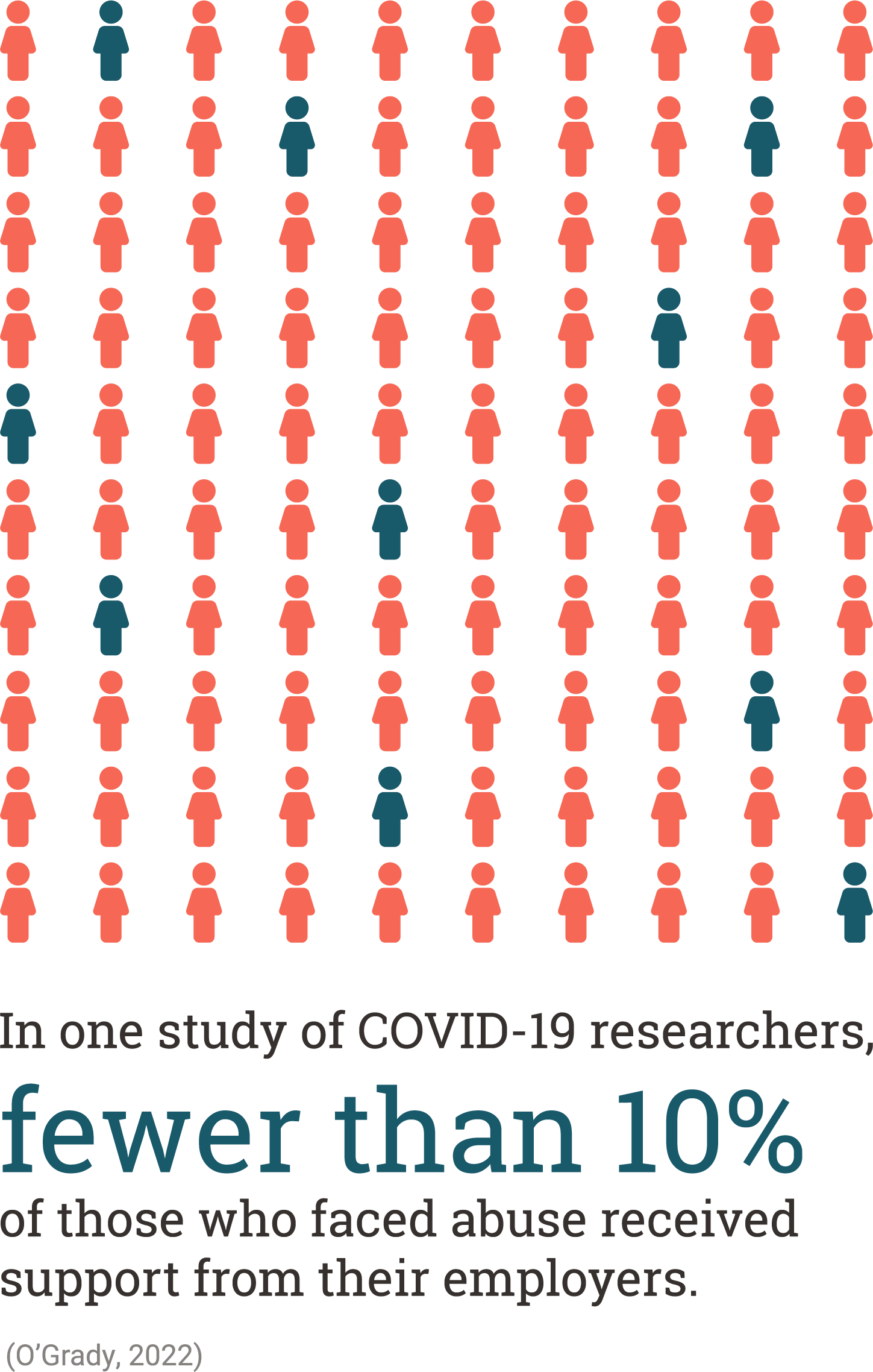
In keeping with this trend, online, offline, and hybrid forms of abuse directed at academic researchers is also increasing, presenting significant consequences for scholars. Researchers experience attacks on their character, their credibility, and their work, with many retreating from the public square as a result, accepting lower exposure for their work as the cost of avoiding online abuse.
In the absence of effective legal frameworks or institutional responses to address these harms, it often falls on individuals to navigate the issues on their own.
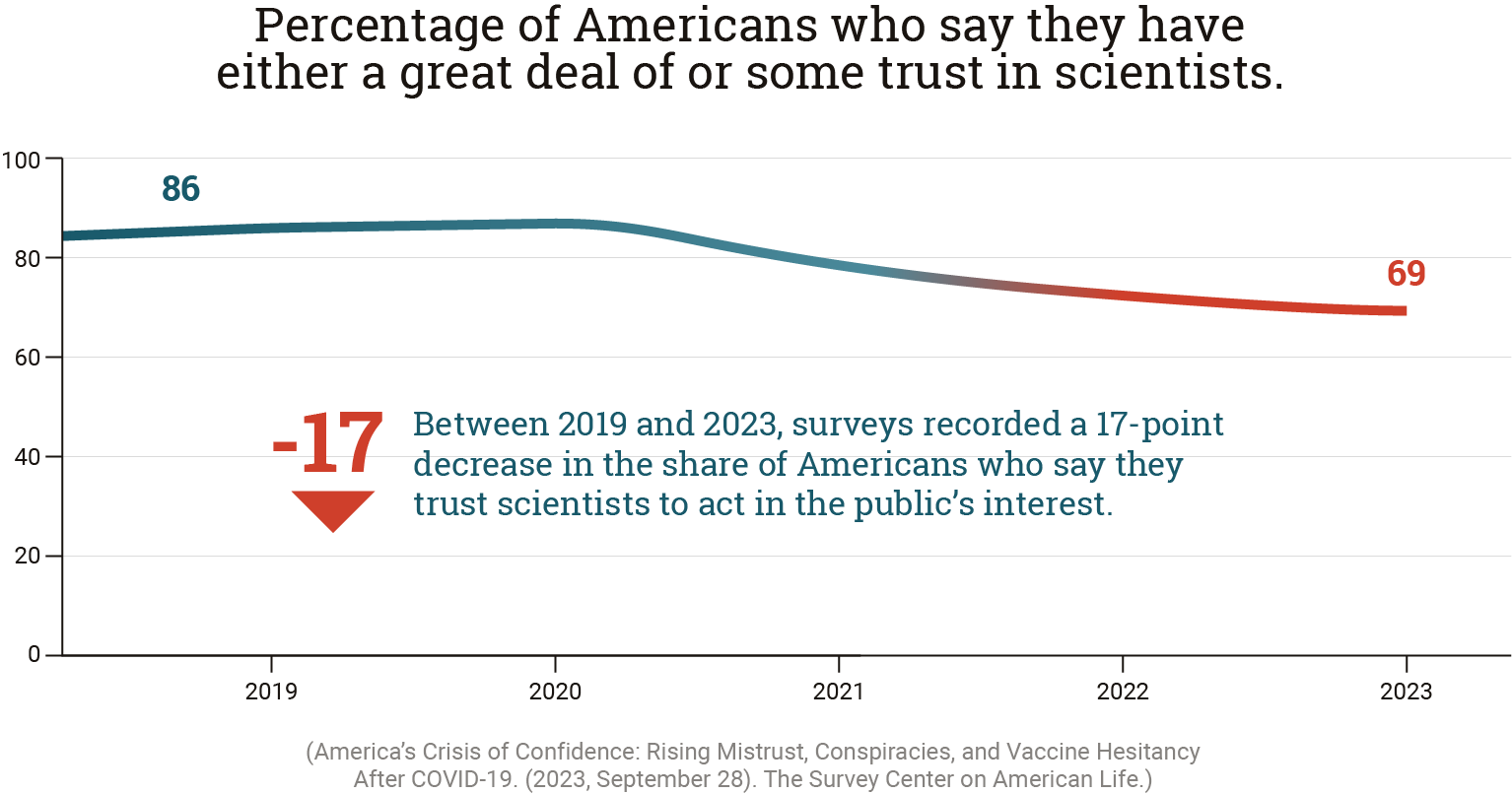
Abuse toward researchers comes in many forms, from coordinated smear campaigns to threatening direct messages, from doxxing to online and offline stalking. Though the individuals and groups responsible for this abuse are diverse in their motivations and tactics, their actions contribute to a well-documented breakdown of public trust in academia and academic expertise. Increasingly, expert knowledge is met with skepticism or even disdain.
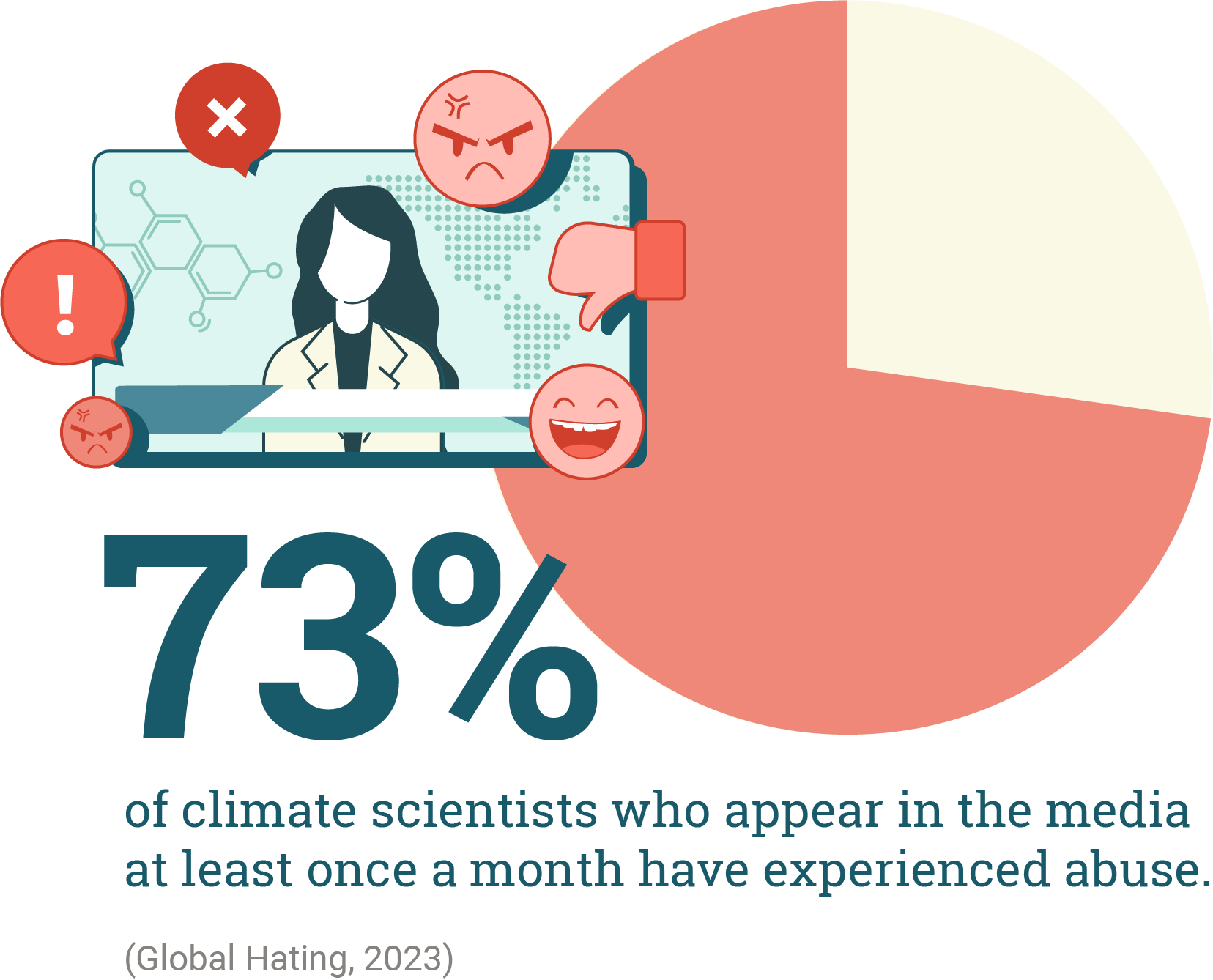
On a personal level, targets of intimidation and harassment by external actors have reported wide-ranging psychological, physical, and professional consequences. Health effects include anxiety, depression, sleeplessness, and social withdrawal. Reputational damage from online allegations has led researchers to pull back from student engagement, leave their institutions, or abandon the profession altogether, fueling a loss of talent that disproportionately affects underrepresented groups.
While this problem is complex and requires action on multiple fronts, we are all in a position to help. Whether you are a researcher, funder, or institution, learn more about the occupational abuse affecting researchers below. And use the tabs at the top of the page to find more information and resources.

A growing number of organizations, including IDDP, have recognized the seriousness of this problem and have made pledges to support researchers facing intimidation and harassment. See their statements of commitment here.
Attacker Types
Who is behind online attacks against researchers?
Few clear lines exist to classify the individuals and groups responsible for abuse directed at the scholarly community. Individual perpetrators may not realize that they are contributing to a coordinated campaign, and those leading such campaigns may intentionally or unintentionally misrepresent their beliefs, motives, or intended outcomes, causing a single campaign to attract a variety of followers. Many attackers are active in more than one online or offline community, participating in multiple instances of abuse and employing different tactics depending on the topic or target. The following categories provide a starting point for understanding the types of individuals and groups who typically target researchers and other experts.
Activist and Advocacy Groups
Members of ideologically-motivated groups may target researchers whose scholarly work or personal viewpoints conflict with their political or social ideals. These groups may orchestrate coordinated harassment campaigns in both virtual and physical settings, often with the goal of turning campus and/or public opinion against the researcher and their institution.
Conspiracy Theory Communities
Members of conspiracy theory communities often target researchers who challenge or debunk their conspiracy narratives. Angered by perceived efforts to suppress their “forbidden” knowledge, conspiracy theorists may initiate harassment campaigns involving the spread of false information, hate mail, doxxing, and in extreme cases, physical violence. Attacks by conspiracy theorists usually gain traction on social media, online forums, or in fringe publications before migrating to more mainstream information spaces, moving offline, or both.
Anti-Science Movements
Individuals and groups that contest scientific consensus on topics such as climate change or vaccination may participate in harassment campaigns against scholars whose scientific research is used to inform public policy. These campaigns often involve the dissemination of anti-science claims, character attacks against scientists, FOIA requests intended to burden and intimidate researchers, and other attempts to discredit researchers’ findings.
Troll Networks
Troll networks typically operate on social media platforms and forums with the aim of intimidating and discrediting their targets with large numbers of posts, comments, and/or direct messages. Trolls may be motivated by any of the aforementioned affiliations or may participate in a harassment campaign for money or other reasons.
Attack Types
What tactics do attackers use?
Threats and Intimidation
Researchers may receive explicit threats of physical harm, death threats, or threats targeting their loved ones. Threats are intended to instill fear in the researcher, potentially causing them to step back from their work. Threats may be made publicly on social media platforms, sent to a researcher’s digital or physical mailbox, or relayed over the phone.
case study
After giving a series of high-profile interviews on COVID-19, an infectious disease researcher at a US teaching hospital had sustained persistent, sometimes graphically disturbing, social media attacks. In September 2020, the vitriol reached a new level; someone had found her personal phone number and called her late at night, threatening to kill her. She reported the incident to the police, but didn’t receive any follow-up. The threatening emails and phone calls continued. After receiving another death threat, the researcher tried to get the police to investigate; the officer she spoke with suggested she get a gun instead.
Personal Attacks and Insults
Researchers may be subjected to personal insults, derogatory remarks, and ad hominem attacks on their character, appearance, background, qualifications, or motivations. This type of attack has been found to represent a disproportionate share of the online abuse directed at women and sexual and gender minorities. Such abuse creates a hostile environment which seeks to undermine the researcher’s credibility and distract them from their work.
case study
Speaking about the 100+ abusive messages she receives for her work each year, one physicist described themes centering on the credibility of her research findings, integrity as a researcher, and status as a woman in science. The physicist cited an uptick in hateful emails and social media messages following appearances in the media and noted that many attacks do not concern the science itself but insult her as a person. The attacks, which are typically anonymous, might accuse the physicist of lying in service of a nefarious agenda or imply that women have no business studying scientific topics. The physicist handles this vitriol by responding only to criticisms that do not contain personal insults or other offensive content.
Doxxing
Doxxing involves the public disclosure of a researcher’s personal information, such as their home address, phone number, or workplace, with the intention of enabling further harassment, stalking, or physical harm. Doxxed materials may be aggregated from information already available online or may constitute previously undisclosed details acquired legally or illegally. Doxxed information relies on online platforms to proliferate. Doxxing violates the terms of most major social media sites.
case study
Driven by conspiracy theories about the origin of the coronavirus pandemic, one website released personal information about a virologist whom it falsely accused of engineering bioweapons. The blog post containing the doxxed information suggested that readers use it to physically track down the scientist.
Dogpiling
Dogpiling involves multiple individuals or groups targeting the researcher simultaneously across online or offline platforms. Tactics include flooding the researcher’s social media accounts with abusive messages, sending them hate mail, visiting them at their home or office, or spreading false information about their character and the nature of their work. Dogpiles may be coordinated, uncoordinated, or a mix of both. Dogpiles can be particularly harmful, because they feel overwhelming and uncontrollable. The swarm of attackers is nameless, faceless, and could come from anywhere.
case study #1
After participating in a fact check on COVID-19 misinformation, one psychology professor became the target of a coordinated online attack led by fans of an influential COVID skeptic. What started with an onslaught of Twitter messages and memes denouncing the professor’s character and credibility quickly migrated onto other social media platforms, including Facebook, Instagram, and LinkedIn. Trolls found the professor’s personal email address and flooded his inbox with hateful messages. Others located and shared contact information for his partner and employer, expanding the scope of harassment.
case study #2
One atmospheric scientist who has commented publicly on climate issues throughout her career experienced a major uptick in online abuse following an interview with a big-name media personality. After the interviewer encouraged his audience to contact her with their thoughts, the scientist’s inbox was inundated with critical messages. When a popular blogger piled on with a post that shared her email address, the volume of attacks increased further. Struggling with the overwhelming negativity, the scientist considered stepping away from science communication altogether.
Reputational Attacks
Researchers may face deliberate efforts to damage their professional reputation through false accusations, character assassination, or the spread of misleading or defamatory information about their work or personal life. Smear campaigns may involve the proliferation of false or manipulated evidence, the creation of fake social media accounts, or the publication of fabricated images or videos.
case study
One biologist whose research involves animal experiments has sustained years of opposition by a major animal rights organization. The animal rights group has galvanized its supporters using misleading claims about the nature and purpose of the biologist’s work, labeling her as an animal-killer and smearing her reputation by sending her neighbors letters with condemnatory information about her research.
Stalking
Harassers may engage in online and/or offline stalking by closely monitoring the researcher’s online activities, attempting to acquire their personal information, sending frequent communications of an invasive or intimidating nature, and/or showing up at their homes, classrooms, offices, or public events.
case study
Following a contentious exchange with a popular Twitter personality, one vaccine researcher experienced escalating criticism on the platform, with numerous high-profile vaccine skeptics and their fans hurling insults and goading him to participate in a public debate about vaccine safety and effectiveness. When the researcher chose to disengage from the Twitter conversation, harassers shifted venues, sending attacks via email. In the ensuing days, a handful of detractors discovered the researcher’s physical address and accosted him in front of his home.
Abuse of Records Requests, Lawsuits, and Other Legal Tactics
Research teams or individual researchers may be bombarded by excessive or spurious requests to review materials pertaining to their work. While open records laws are important in ensuring transparency and accountability in public institutions, harassers may weaponize this right to overwhelm or intimidate scholars whose research they oppose. Scholars may also face spurious, but time-consuming and expensive, lawsuits filed by individuals, organizations, or political officials. Politicians might also request–in some cases even subpoenaing–documents and testimony from researchers and their institutions.
case study
Having received threats and abuse over the course of his career, one climate scientist working at a public university found himself up against a new type of attack: an intrusive and baseless legal investigation seeking detailed information about his research. The subpoena that launched the investigation came from the office of the state Attorney General, which accused the scientist of using public money to perpetuate fraud. Soon after, climate denier activists filed their own records requests, adding to the university’s administrative burden and publicity concerns.
Attack Themes
What are the most common arguments, sentiments, and narratives employed in attacks on researchers?
Perception of Bias
Some attackers believe (or claim to believe) that researchers have a predetermined agenda or harbor biased views regarding certain issues and ideas. Attacks are often framed as advocacy to protect free expression and promote public debate.
Political Objections
Some researchers focus on topics that have policy ramifications, such as elections, public health, and climate science. Some attackers argue that scholars should avoid weighing in on such issues, while others oppose the stances their work appears to support. Often attackers claim that researchers or their work have taken a policy or political stance that they have not.
Distrust of Academia and Experts
The societal trend of skepticism toward academia and expert authority extends to most fields of research, with a substantial portion of the public perceiving experts as part of an establishment that is disconnected from the concerns and perspectives of everyday citizens. Attacks against researchers frequently exhibit feelings of disdain, resentment, or hatred toward the very concept of expertise. Attempts to discredit an individual researcher’s authority may hinge on a rejection of their field or of their expertise as a whole.
Opposition to Social Justice Movements
Groups and individuals who oppose social justice causes may coordinate harassment campaigns against researchers working in gender studies, racial equality, LGBTQ+ rights, or other identity-focused areas. Researchers may be accused of suppressing diversity of thought or forsaking scientific objectivity in the interest of promoting their agenda within America’s educational and cultural institutions. Attackers often also accuse researchers of being “DEI hires” or make similar claims that belittle the researchers’ credentials and knowledge.
Identity-Based Harassment
Ad hominem attacks against individual researchers may aim to discredit the researcher on the basis of factors such as gender, race, sexual identity, or religion. Women and people of color are often attacked with greater frequency, intensity, and hostility than other groups.
Who Is Impacted
Which groups are particularly vulnerable to online abuse?
Scholars Who Study Politically Contentious Topics
These scholars are especially likely to be targeted by troll networks and other groups that use public forums to disparage and discredit ideas they oppose. Several surveys of academic researchers have identified climate scientists, medical researchers, and gender studies scholars as some of the most frequently attacked groups. Note, however, that virtually any research topic can become politically contentious as issues ebb and flow within political and information ecosystems. For researchers who speak publicly about their work on politically charged topics, the risk of abuse is particularly high.
Scholars Who Post Frequently On Social Media and/or Make Regular Media Appearances
Funders and employers often actively encourage researchers to expand their reach and impact, but these activities can also make researchers more vulnerable. Scholars engaging online and in the media face significantly more online and offline abuse, including doxxing, stalking, and other abuse designed to punish them for their public communication. With expertise increasingly under fire, researchers who appear in mainstream media outlets may be branded as “pro-establishment” and demonized by groups that invalidate experts not for the content of their work, but for their perceived relationship to political, economic, or cultural power structures.
Female and Non-cisgendered Researchers
Numerous studies have found that female and non-cisgendered individuals experience online and offline abuse at higher rates than their male and cisgendered counterparts. Furthermore, a disproportionate share of the harassment aimed at these researchers focuses on personal characteristics like physical appearance or sexuality. Female and non-cisgendered scholars in the natural sciences, medicine, and other majority-male disciplines are particularly vulnerable to gender-based attacks.
Researchers from Racial, Ethnic, or Religious Minority Groups
Similar to gender-based attacks, researchers from racial, ethnic, or religious minority groups are more likely to experience online and offline harassment. The duration and severity of attacks also tend to be greater.
Impacts
What are the personal and societal consequences of the abuse?
Mental and Physical Health Issues
These issues are common in the aftermath of both online and offline abuse. Anxiety, depression, paranoia, stress, and sleep problems are well-documented reactions to the trauma of being threatened, doxxed or falsely maligned. The psychological toll of online abuse is difficult to navigate, as attacks can occur at any time and place and are often not taken seriously by colleagues, employers, or loved ones. The fallout of past attacks and fear of those to come can profoundly affect researchers’ professional and private lives.
Productivity Loss
Loss of productivity often results from work-related attacks, as the burden of addressing and mitigating abuse often falls to researchers. Those who’ve experienced abuse may find it difficult to focus on research or everyday tasks.
Disengagement from Digital and In-Person Communication
Disengagement is the first step many scholars take after their public comments draw attacks. When the costs of speaking publicly about their work begin to outweigh the benefits, scholars may choose to decline interviews or TV appearances, turn down speaking engagements and conferences, stop posting on social media, or erase their online presence altogether.
Self-Censorship
Self-censorship is a growing concern in academia, as researchers seek to protect themselves from public scrutiny. Fearing the consequences of public exposure, scholars may decide against communicating certain aspects of their work, leading to a collective loss of expert knowledge and perspective.
Talent Drain
Talent drain is an inevitable consequence of an occupational environment that is increasingly hostile to researchers and their work. Scholars whose work has consistently attracted abuse or those in high-visibility or controversial fields may choose to switch their focus, favoring less risky subject areas. Students who are training to enter academia may be deterred from pursuing important topics or fields. In extreme cases, researchers may leave their institutions or the profession entirely as a result of mental health impacts, reputational damage, or threats to themselves or their families.
Worsening Underrepresentation
Underrepresented identities—for example, women in the natural sciences—have consistently been found to experience higher levels of harassment relating to their identity and their work. Members of demographic groups that are more vulnerable to abuse may avoid positions that risk public scrutiny or leave those positions after having negative experiences.
Degradation of Information Ecosystems
The silencing of expert voices not only harms the quality of information and debate, but validates the power of online and offline abuse tactics as instruments for personal, political, and economic gain.
© 2024 Researcher Support Consortium. All rights reserved.